Breathing is the most personal habit you have—and paradoxically, one of the most powerful when practiced together. In recent years, a robust body of social neuroscience has shown that shared rhythmic practices change our physiology in ways solo work cannot. In this article, you’ll learn why group breathwork magnifies stress relief, resilience, and cognitive performance; how synchronization affects hormones and heart rhythms; and practical ways to bring collective breathing into your life and team culture. We’ll also explore how The Pantheon Method leverages multisensory entrainment to make group breathwork more effective, measurable, and sustainable.
The physiology of synchrony: why breathing together changes your body
Respiratory–cardiac entrainment and vagal tone
When a group breathes at the same pace, respiratory rhythms can entrain heart rhythms—a phenomenon observed in choir singing and coordinated movement. Studies from the University of Gothenburg (Vickhoff et al., 2013) showed that choir singing leads to synchronized heart-rate variability (HRV) patterns across participants, suggesting shared increases in vagal tone. Slow, paced breathing (around 5–6 breaths per minute) is known to enhance HRV and parasympathetic activity (Noble & Hochman, 2019), supporting downregulation of the stress response. Group breathwork aligns the timing of inhalations and exhalations, which amplifies this entrainment effect and makes relaxation more reliable across the room.
Oxytocin, endorphins, and social bonding
Synchronization also influences neurochemistry. Oxford research on coordinated movement (Tarr, Launay & Dunbar, 2014) found that moving in time elevates pain thresholds—a proxy for endorphin release—and enhances social bonding. Parallel findings in group singing and chanting show increases in affiliative hormones and decreases in cortisol. This “collective buffering” not only makes breathwork feel easier, it strengthens motivation to return, a critical ingredient for long-term mental wellbeing.
Techniques: coherent breathing and rhythmic cues
Evidence-backed techniques like coherent breathing (5–6 breaths/minute), box breathing (4-4-4-4), and the physiological sigh (two quick inhales, long exhale) are simple to synchronize with a group. Stanford research (Balban et al., 2023) suggests brief daily breathwork can outperform mindfulness for immediate mood improvements; performing these methods together layers entrainment and accountability. The Pantheon Method curates tempos, music, and guided cues to align respiration across participants, reinforcing shared vagal activation and emotional stability.
Social buffering: the stress-relief multiplier of groups
Social baseline theory and co-regulation
According to social baseline theory (Coan, 2006), the human brain expects proximity to others and uses social resources to conserve energy. In other words, being with trusted people reduces the perceived cost of regulating distress. Hand-holding experiments show reduced threat responses in the brain, and this co-regulation extends to breathing: when others model calm respiration, your body attunes. Group breathwork harnesses this built-in economy of effort, allowing participants to access calm more quickly and stay there longer.
Evidence from group practices
Research on group singing (Fancourt & Perkins, 2018) and yoga communities shows lower salivary cortisol and improved mood compared to solo practice, pointing to the additive power of social context. Mindfulness-Based Stress Reduction (MBSR), typically delivered in a group format, reliably reduces anxiety and improves sleep—benefits influenced by practice fidelity and peer support. These findings align with data on the Effect of Breathwork on Brain Function and Health, where consistent practice enhances autonomic balance and attentional control.
Psychological safety and adherence
When people feel psychologically safe, they engage more fully with challenging techniques—long exhales, breath holds, or interoceptive attention. Group norms and gentle accountability increase adherence, which is a major predictor of outcomes in stress-reduction programs. By designing an experience that fosters safety and cohesion, The Pantheon Method amplifies the stress-relief multiplier inherent in group settings.
Neuroplasticity and learning: how groups accelerate habit change
Hebbian learning, mirror neurons, and interoception
Neuroplastic change follows the rule “neurons that fire together, wire together.” In group breathwork, shared timing and cues produce simultaneous activation across interoceptive networks (insula) and attentional circuits (anterior cingulate), promoting more robust learning. Mirror neuron systems facilitate imitation; hearing and seeing others breathe smoothly can subconsciously refine your own technique, strengthening the neural pathways that support calm and focus.
Accountability, consistency, and habit loops
Habit science shows cues and social reinforcement are potent. Group calendars and predictable rhythms reduce friction; peers become prompts that link context to behavior. Over time, the routine reshapes “cue–routine–reward” loops, making breathing practices more automatic. For structured strategies to shift unwanted patterns, see Breathwork and Meditation to Break Bad Habits.
Structured feedback and guided protocols
Immediate feedback—hearing the collective exhale, feeling the room settle—helps participants calibrate depth and tempo. Guided protocols such as 4-7-8 breathing, cyclic sighing, and paced exhalation trains provide consistent scaffolding for neuroplasticity. The Pantheon Method’s 50-minute arc uses evidence-informed progressions to consolidate learning, translating practice into durable calm in everyday contexts.
Cognition, creativity, and collective flow
Attentional control and salience network
Breath-focused practices strengthen top-down control from prefrontal regions and modulate the salience network, improving the detection of relevant stimuli while quieting rumination in the default mode network. Studies of focused-attention meditation (e.g., Hasenkamp et al., 2012) show rapid cycling between mind-wandering and refocusing; paced respiration reduces the “cost” of returning attention, boosting cognitive flexibility.
Group flow and creative cognition
Teams that synchronize physiologically are likelier to enter flow. Research on coordinated groups indicates heightened cooperation and problem-solving when rhythms align, partly due to shared autonomic states and trust. For a deeper dive into how physiological coherence supports ideation, explore The Science Behind Creativity. Group breathwork provides an efficient on-ramp to this state by harmonizing arousal levels across participants.
Protocols for high-performance teams
Five-minute synchronized breathing before meetings can improve focus and interpersonal attunement; longer sessions can prime strategy work or debriefs. The Pantheon Method integrates rhythmic soundscapes and precise pacing to standardize the effect across diverse groups—a practical advantage for teams seeking reliable performance gains.
From office to studio: practical ways to run group breathwork
How to structure a 20–50 minute group session
Consistency and clarity matter more than complexity. A simple structure:
- 2–3 minutes: settle and posture (neutral spine, relaxed jaw, diaphragmatic check)
- 5 minutes: coherent breathing at 5–6 breaths/min (in 5, out 5)
- 2 minutes: cyclic sighing (double inhale, long sighing exhale)
- 8–10 minutes: box or 4-7-8 breathing (light holds, extended exhalation)
- 5 minutes: quiet interoceptive meditation (observe heartbeat, temperature, breath)
- 3 minutes: re-entry and brief reflection
For more daily structures, see How to Incorporate Breathwork Into Your Daily Life.
Safety, contraindications, and inclusivity
Offer seated and standing options; allow nasal breathing by default; invite participants to shorten holds if pregnant, managing cardiovascular conditions, or new to breathwork. Encourage “opt-out” signals to maintain autonomy. Emphasize slow exhales and avoid aggressive hyperventilation for beginners; prioritize comfort over intensity. Clear guardrails increase trust—and results.
In-person vs. remote: making synchrony work online
In-person sessions naturally enhance sensory cues, but group breathwork can work well remotely with metronomes, music at 60–90 BPM, and visual timers. Encourage cameras on for posture checks, mute audio for noise control, and keep time cues crisp. The Pantheon Method’s rhythmic design translates to both studio and digital environments, sustaining synchrony even across time zones.
Inside The Pantheon Method: purification through breath and energy
Kapalabhati and Kriya — the engine of the practice
The Pantheon Method is built on Kriya yoga and ancient purification techniques, not gentle or slow breathing. At its core is Kapalabhati — rapid, sharp, forceful exhales driven by the abdominal muscles, combined with passive inhales. This rhythmic breath of fire generates internal heat, stimulates the nervous system, and clears stagnant energy in a way that passive breathwork cannot. Practiced in a group, the collective cadence of sharp exhales creates a powerful shared field of activation that amplifies the individual effect.
Breath retention, energy centers, and the purification arc
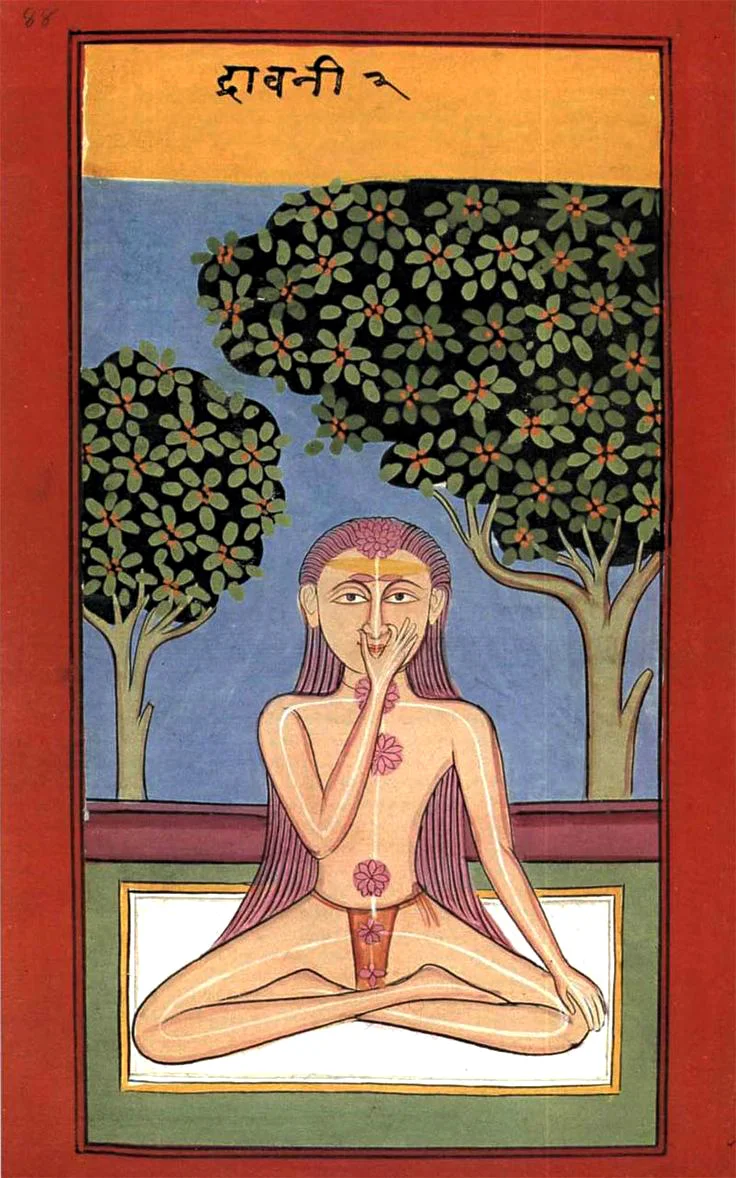
Woven through the 50-minute session are deliberate breath retentions — Kumbhaka — held at full inhale or at empty. These pauses intensify the internal experience, directing awareness into specific energy centers (chakras) that serve as focal points throughout the practice. Moving sequentially through the energy centers with breath and guided attention produces a deep purification effect: physical tension dissolves, mental noise quietens, and energetic blocks release. This is not relaxation — it is transformation through active engagement with the breath.
Ancient technique, modern science, collective resonance
The Pantheon Method layers binaural soundscapes and precise guidance over these Kriya techniques to deepen entrainment and make the experience accessible to groups. What ancient yogic traditions understood intuitively, neuroscience is now quantifying: forceful breathing practices produce distinct neurological and physiological effects — altered CO₂ and O₂ balance, shifts in autonomic state, and heightened interoceptive awareness. In a group setting, the shared rhythm of sharp exhales and synchronized retentions creates collective resonance, turning an individual practice into something far more powerful. For background on the neural mechanisms, see Effect of Breathwork on Brain Function and Health and 3 Ways to Change Your Brain.
Key Takeaways
- Group breathwork leverages physiological synchrony—shared breathing rates can entrain heart rhythms, increase vagal tone, and stabilize mood.
- Social buffering reduces stress more efficiently in groups; synchronization boosts endorphins and bonding, improving adherence and outcomes.
- Collective practice accelerates neuroplasticity via mirror systems and shared cues, making calm and focus more automatic over time.
- For cognition and creativity, aligned arousal and attention set conditions for group flow and better problem-solving.
- Structured protocols (coherent breathing, cyclic sighs, 4-7-8) and clear safety guidelines make sessions effective in offices, studios, and online.
- The Pantheon Method integrates these principles into a 50-minute, evidence-informed experience engineered for collective entrainment.
Breathing alone will always have value. But when practiced together, the benefits compound—physiology aligns, stress drops faster, and the brain learns more deeply. If you’re ready to experience how science-backed group breathwork feels in real time, explore The Pantheon Method. Whether you’re a professional seeking sharper focus or a team aiming for collective flow, this immersive, rhythmic approach turns shared intention into measurable change.