Imagine a single, structured practice that steadies your nervous system, sharpens your focus, and measurably improves your mood before your first email. This guide lays out a science-backed 50-minute morning breathwork ritual that leverages autonomic physiology and neuroplasticity—so you can change your brain on purpose. You’ll learn the exact timing, techniques, and why each step works, drawing on research in heart-rate variability (HRV), the vagus nerve, limbic oscillations, and default mode network dynamics. This is the backbone of The Pantheon Method, an immersive 50-minute rhythmic breathing and meditation experience in Portugal designed to recalibrate stress and enhance cognitive performance. If you’re ready to anchor your mornings with clarity and calm, here’s the protocol used by high-performing professionals and wellness seekers alike.
Why Morning Breathwork Changes Your Brain
Morning is biologically primed for state shifts. The cortisol awakening response peaks within 30–45 minutes of rising, creating a window for deliberate autonomic control. When you guide breath rhythm early in the day, you can steer arousal toward focused readiness rather than rumination. Studies show that slow, diaphragmatic breathing (around 5–6 breaths per minute) increases HRV, an index of vagal tone linked with better executive function and emotion regulation (Thayer & Lane, 2000; Park & Thayer, 2014). Nasal breathing in particular has unique effects: research by Zelano et al. (2016) found nasal respiration entrains limbic oscillations and modulates amygdala and hippocampal function, influencing memory and emotional processing.
Brief, structured respiration also improves mood and physiological markers more than passive mindfulness in some contexts. In a 2023 study led by Huberman and colleagues, short daily breathwork practices—especially those emphasizing extended exhales—outperformed mindfulness meditation for increasing positive affect and reducing respiratory rate. Morning breathwork can additionally dampen default mode network (DMN) overactivity associated with mind-wandering (Brewer et al., 2011), enabling clearer task engagement. This is exactly why the 50-minute morning breathwork ritual is a core element of The Pantheon Method: it capitalizes on circadian biology and neurophysiology to set your neural tone for the day.
The 50-Minute Protocol: A Time-Boxed Sequence
Minutes 0–5: Prime the system
Start seated, spine tall, feet grounded. Spend 60 seconds scanning posture, releasing jaw and shoulders. Then nasal-priming humming (60–90 seconds) generates nitric oxide—naturally produced in paranasal sinuses—which supports airway dilation and may improve oxygen uptake. Finish with 3–5 physiological sighs: two quick nasal inhales (second shorter) followed by a long, unforced nasal exhale. This reflexively reduces sympathetic drive by recruiting pulmonary stretch receptors and offloading CO₂. The goal in this opening block is to shift from groggy to alert without spiking stress.
Minutes 5–20: Coherent breathing for vagal tone
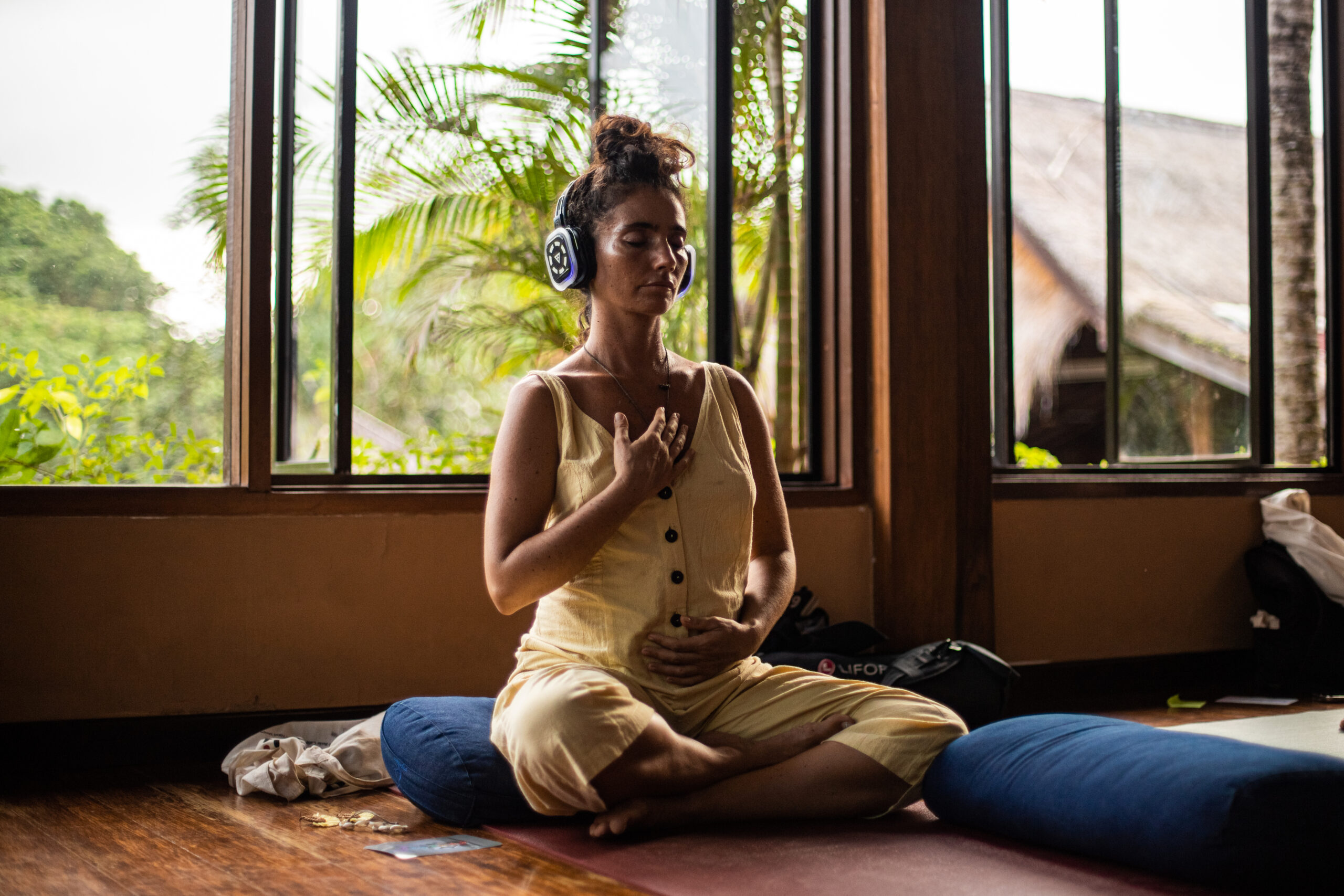
Set a timer for 15 minutes of coherent breathing at ~5.5 breaths per minute (inhale 5 seconds, exhale 5 seconds). Place one hand on the lower ribs to ensure diaphragmatic movement. Keep the mouth gently closed and breathe through the nose. This cadence maximizes respiratory sinus arrhythmia, increasing HRV and baroreflex sensitivity—mechanisms associated with emotional stability and cardiovascular efficiency. If you use a wearable, you should see gradually lengthening interbeat intervals and a calmer respiratory rate. Coherence early in the 50-minute morning breathwork ritual steadies the system for the deeper work ahead.
Minutes 20–30: Tolerance and control (box + light holds)
Transition to 5 minutes of box breathing: inhale 4 seconds, hold 4, exhale 4, hold 4. This evens out the autonomic rhythm and enhances top-down control. Next, add gentle end-exhale breath holds (no strain): inhale nasal, exhale nasal fully, hold 5–15 seconds, then resume easy breathing for 3–4 cycles. These short holds build CO₂ tolerance, teaching chemoreceptors to accept slightly elevated CO₂ without panic—useful for stress resilience. Stay seated, never practice near water, and stop if you feel lightheaded. This mid-block consolidates autonomic flexibility without overtaxing the system.
Minutes 30–50: Downshift, Focus, and Intention
Minutes 30–35: Cyclic sighs to release tension
Spend 5 minutes on cyclic sighs: a deep nasal inhale, a second quick top-off nasal inhale, and a long, complete nasal exhale—repeat at your own pace. Huberman’s 2023 work indicates this pattern robustly reduces arousal and improves affect. The double inhale reinflates collapsed alveoli while the extended exhale maximizes parasympathetic drive. Use this as a deliberate “reset” within the 50-minute morning breathwork ritual to downshift before meditation.
Minutes 35–45: Focused-attention or open-monitoring meditation
Choose one: (1) Focused attention—anchor on nasal sensations at the tip of the nose; gently return when distracted. (2) Open monitoring—notice sensations, thoughts, sounds without judgment, letting them pass. Neuroscience studies show mindfulness can thicken cortical areas (Lazar et al., 2005) and reduce amygdala reactivity (Taren et al., 2013). Keep breath natural; the prior breathwork has already tuned your physiology. Use a soft gaze or closed eyes. Aim for metacognitive awareness—the ability to notice mind-wandering and return.
Minutes 45–50: Visualization and one-priority intention
Finish with 3–5 minutes of future pacing: visualize one key task executed flawlessly, engaging sensory detail (what you see, hear, feel). Then articulate a single implementation intention: “If it’s 10:00 a.m., then I open the brief and write the first paragraph.” This anchors neural pathways formed during the session to a concrete behavior. Professionals using The Pantheon Method report this final step transforms calm into actionable focus, turning state into results.
The Neuroscience Behind Each Step
Vagus nerve, HRV, and coherent breathing
Coherent breathing stimulates vagal afferents via slow diaphragmatic movement and baroreceptor timing, increasing HRV. Higher HRV correlates with greater prefrontal-limbic coupling, supporting emotion regulation and decision-making (Thayer et al., 2012). By front-loading coherence in the 50-minute morning breathwork ritual, you set the prefrontal cortex up to govern limbic impulses—useful before the day’s cognitive load accumulates.
CO₂, chemoreflex, and stress resilience
Short, controlled end-exhale holds increase tolerance to CO₂, the main driver of air hunger. Training at safe, submaximal levels reframes the chemoreflex so that small spikes in CO₂—like those during acute stress—don’t trigger disproportionate panic. This aligns with interoceptive exposure principles used in anxiety treatment and with athletic CO₂ tolerance training that improves autonomic flexibility. The result: fewer overreactions to everyday stressors and faster return to baseline.
Nasal breathing, limbic oscillations, and attention networks
Nasal airflow entrains gamma and theta activity in the limbic system (Zelano et al., 2016), potentially improving memory retrieval and emotional processing. Meanwhile, meditation reduces default mode network dominance, increasing connectivity in task-positive networks (Brewer et al., 2011). The combined effect of breathwork plus meditation is a shift from internal chatter to task-relevant attention. For a deeper dive into mechanisms, explore the Effect of Breathwork on Brain Function and Health, which aligns closely with how The Pantheon Method sequences practices.
Customize the Ritual for Stress, Focus, or Habit Change
High-stress days: Emphasize exhale and cyclic sighs
If anxiety is elevated, extend exhale-focused breathing (e.g., inhale 4 seconds, exhale 8 seconds) for 5–10 extra minutes before meditation. Add a few more cyclic sighs. Longer exhales boost parasympathetic activation, reducing sympathetic overdrive without sedation—a potent adjustment within the 50-minute morning breathwork ritual.
Deep-focus days: Precision and CO₂ tolerance
On days demanding intense concentration, spend more time on box breathing and brief end-exhale holds. This strengthens top-down control of respiration and boosts interoceptive precision—both useful for sustained attention. Pair the final visualization with a “one priority” rule to prevent context switching.
Behavior change: Pair breathwork with implementation intentions
Breathwork stabilizes state; pairing it with intention design changes traits over time. Attach clear if–then plans to the last five minutes, and use environmental cues (calendar alarms, visible checklists). For evidence-based strategies, see Breathwork and Meditation to Break Bad Habits and 3 Ways to Change Your Brain. The Pantheon Method integrates these principles to turn a morning practice into durable neural rewiring.
Make It Stick: Habit Design, Tracking, and Environment
Design for consistency (not perfection)
Schedule the 50-minute morning breathwork ritual at a fixed time within your first 90 minutes awake. Stack it after a consistent cue—water, light exposure, or a brief mobility sequence. Reduce friction: dedicated corner, cushion, and a timer pre-set with your breathing intervals.
Track what matters
Measure inputs and outcomes weekly, not obsessively daily. Useful metrics include: resting HRV trends, morning subjective calm (0–10), and task completion on your “one priority.” If wearables are available, track respiratory rate and time in high-frequency HRV bands during coherent breathing. Over weeks, you should observe lower baseline respiratory rate and improved mood.
Environment and lifestyle levers
Light, temperature, and posture shape autonomic tone. Expose your eyes to outdoor light early, keep the room cool, and sit upright to allow diaphragmatic excursion. Supporting habits amplify effects—sleep consistency, caffeine timing, and evening wind-down. For a broader lifestyle blueprint, visit Lifestyle Habits for Mental Wellbeing and How to Incorporate Breathwork Into Your Daily Life. These align tightly with The Pantheon Method’s philosophy: small, high-yield changes compound.
Troubleshooting, Safety, and Progression
Common challenges and solutions
- Nasal congestion: Try a gentle saline rinse or extended humming before coherent breathing; keep intensity low until airflow improves.
- Dizziness or tingling: Reduce breath depth and skip holds; prioritize slow exhales. Always practice seated and never near water or while driving.
- Restlessness in meditation: Shorten the sit to 8–10 minutes and increase cyclic sighs beforehand; build up gradually.
Progression over 4–6 weeks
- Weeks 1–2: Master cadence at 5–6 breaths/min and consistent posture. Keep holds minimal.
- Weeks 3–4: Add 1–2 extra minutes of box breathing and extend exhales (1:2 ratio) during downshift.
- Weeks 5–6: Refine meditation quality; practice returning attention with less effort and more precision.
When to modify or seek guidance
If you have cardiovascular, respiratory, or psychiatric conditions, consult a clinician before adding breath holds or intensive protocols. Pregnant practitioners should avoid prolonged holds and emphasize gentle coherence and meditation. For guided, scalable instruction, consider a session with The Pantheon Method—its structure mirrors this evidence-based flow while adapting to individual responses.
Key Takeaways
- The 50-minute morning breathwork ritual exploits the cortisol awakening window to steer autonomic state, reducing stress and sharpening focus.
- Coherent breathing (5–6 breaths/min) increases HRV and vagal tone; cyclic sighs effectively reduce arousal and improve mood.
- Nasal breathing entrains limbic oscillations, while meditation decreases default mode network dominance—together enhancing cognitive control.
- Short end-exhale holds build CO₂ tolerance, improving resilience to daily stressors when practiced safely.
- Customize for stress (long exhales), focus (box breathing and light holds), or habit change (implementation intentions).
- Consistency beats intensity: stack the practice to a fixed cue, track weekly, and refine gradually for durable neuroplastic gains.
- The Pantheon Method sequences these elements into an immersive 50-minute experience to accelerate results.
Done well, the 50-minute morning breathwork ritual becomes a keystone habit: a daily appointment with your nervous system that translates calm into clarity and action. If you want expert guidance and an immersive, science-grounded experience, explore The Pantheon Method in Portugal—built on the same principles you’ve just learned, with coaching that helps you integrate them into a high-performing life.