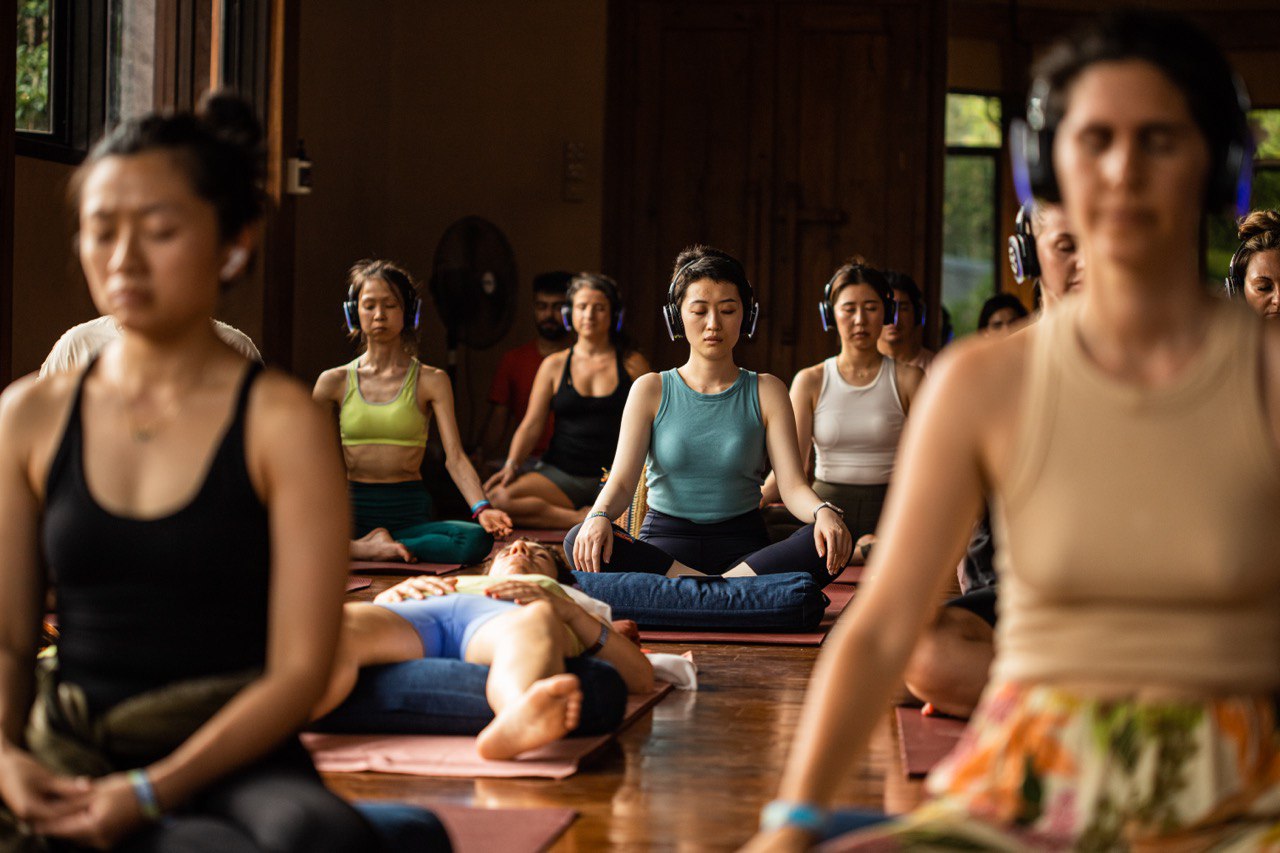
If you track your health metrics, you’ve likely noticed heart rate variability (HRV) at the top of every biohacker’s dashboard. But beyond the hype, what does HRV actually measure—and how do you improve it in a way that builds real resilience? In this guide, you’ll learn how to improve HRV using a science-backed approach that blends ancient yogic techniques with modern neuroscience. We’ll explain how breathing mechanics influence the vagus nerve and baroreflex, why rhythmic forceful breathing plus breath retention train autonomic flexibility, and how The Pantheon Method—an immersive, 50-minute breathwork and meditation experience in Portugal—targets HRV through dynamic, heat-generating practices layered with binaural soundscapes.
HRV 101: What It Measures and Why It Matters
HRV, vagal tone, and autonomic flexibility
Heart rate variability is the beat-to-beat variation in your heart’s rhythm. Higher resting HRV generally reflects stronger vagal tone and better autonomic flexibility—the ability to shift efficiently between sympathetic drive (mobilization) and parasympathetic recovery (restoration). Reviews by Shaffer and Ginsberg (2017) and Laborde et al. (2017) highlight HRV as a proxy for stress adaptation, executive function, and emotional regulation. In practical terms, elevated HRV is associated with improved recovery, cognitive control, and metabolic efficiency.
Which metrics actually matter
For daily tracking, RMSSD (root mean square of successive differences) is the most reliable time-domain metric because it indexes short-term vagal modulation and is comparatively robust to breathing rate. Frequency-domain measures add context: HF power (0.15–0.4 Hz) maps to parasympathetic influence, while LF power (0.04–0.15 Hz) mixes baroreflex and both autonomic branches. Avoid over-interpreting LF/HF ratio; Billman (2013) cautions that it is not a clean marker of “sympathovagal balance.” Consistency in timing and posture is more important than chasing a single number.
What “good” HRV looks like
There is no universal “good” HRV. Values vary by sex, age, fitness, and genetics. Focus on your moving baseline: trends over weeks, how quickly HRV rebounds after stress, and day-to-day stability. Improving HRV is ultimately about training your nervous system’s adaptability—exactly what targeted breathwork and meditation can accomplish when applied correctly.
The Physiology Link: How Breathing Changes HRV
Respiratory sinus arrhythmia and the baroreflex
Every breath subtly accelerates and decelerates your heart through respiratory sinus arrhythmia (RSA). Slow, coherent breathing near your personal resonance frequency (~4.5–6.5 breaths/min) amplifies RSA and baroreflex sensitivity, often boosting HF power and RMSSD (Lehrer & Gevirtz, 2014). This is the classical route to higher HRV. But it’s not the only path: dynamic breathwork can build capacity via a different mechanism—autonomic range and rebound.
CO2 tolerance, chemoreflex, and retention (Kumbhaka)
Deliberate breath holds train the chemoreflex and expand CO2 tolerance. Kumbhaka exposes you to controlled hypercapnia-hypoxia windows, enhancing interoceptive awareness and modulating the autonomic set-point. Over time, this can improve baroreflex efficiency and post-session parasympathetic recovery. Brown and Gerbarg (2005) describe how pranayama protocols with retention improve resilience by conditioning both the vagus and central regulatory networks.
Kapalabhati, heat, and autonomic rebound
Kapalabhati (rapid, forceful exhales) is intentionally activating. Studies on fast pranayamas show acute sympathetic arousal and alertness with subsequent vagal rebound and improved sustained attention (Telles et al., 2011; Raghuraj & Telles, 2003). The key is programming: cycles of sharp rhythmic breathing and strategically placed retentions create an oscillatory “stress-recover” training effect. The Pantheon Method leverages precisely this sequence—active internal heat followed by measured stillness—to expand your autonomic operating range and, over sessions, elevate resting HRV.
How to Improve HRV with The Pantheon Method
Dynamic cycles that train flexibility
The Pantheon Method blends Kriya-rooted techniques with modern neuroacoustics. You’ll move through intervals of Kapalabhati—rapid, sharp exhalations—punctuated by Kumbhaka at full or empty lung. This is not gentle breathing; it is deliberate, energising work that generates internal heat (tapas) and conditions your nervous system to switch states on command. That switching capacity—sympathetic engagement without overwhelm, followed by deep parasympathetic “drop”—is central to how to improve HRV beyond slow breathing alone.
Energy centers as sequential focal points
Each cycle uses energy centers (chakras) as attentional anchors, moving sequentially from base to crown. Focal shifts cultivate interoceptive precision in the insula and anterior cingulate, regions tied to autonomic control and self-regulation. This layered attention amplifies top-down modulation of the vagus nerve while the breathing mechanics drive bottom-up change. The combination yields a purification effect—physical, mental, and energetic—that supports measurable HRV improvements over time.
Binaural soundscapes and neural entrainment
Custom binaural soundscapes guide tempo and depth of focus, supporting state transitions via frequency-following responses. While audio does not directly “change HRV,” it stabilizes attention and synchronizes cycles, allowing the breath to do its work more effectively. To understand these brain-body links in depth, explore the Effect of Breathwork on Brain Function and Health, which breaks down how respiration influences neural networks involved in autonomic regulation.
What the Research Says: Breathwork, Meditation, and HRV
Pranayama and HRV modulation
Systematic reviews report that paced breathing and pranayama practices improve HRV metrics, often increasing RMSSD and HF power while enhancing baroreflex sensitivity (Zaccaro et al., 2018; Lehrer et al., 2020). Slow breathing protocols are well-documented, but fast yogic practices like Kapalabhati also show benefits when paired with retention and recovery periods, producing alertness with post-exercise parasympathetic rebound (Telles et al., 2011).
Meditation and top-down control
Meditation enhances prefrontal-internal network connectivity and emotion regulation, which correlates with higher baseline HRV (Tang, Hölzel, & Posner, 2015). Focused attention on interoceptive targets (like energy centers) trains cortical areas that interface with autonomic nuclei. The Pantheon Method integrates this attentional training with active breathing, uniting top-down and bottom-up levers for HRV.
Putting it together
The strongest HRV improvements tend to come from a combined approach: respiratory mechanics that stimulate the baroreflex and vagus, interoceptive attention that sharpens control, and progressive exposure that increases autonomic range. This is precisely why a 50-minute, sequenced session can outperform brief, isolated techniques. If you’re curious about stacking changes for neuroplasticity, see 3 Ways to Change Your Brain for additional principles you can apply alongside HRV training.
A 4-Week Plan to Elevate HRV (and Track It Correctly)
Weekly progression
If you want a practical framework for how to improve HRV with The Pantheon Method, start with a four-week cycle. Keep the practice dynamic and precise—this is not a slow or passive routine.
- Week 1: 2 sessions/week (50 minutes). Emphasize technique in Kapalabhati and safe Kumbhaka timing; note perceived exertion and alertness curves.
- Week 2: 3 sessions/week. Add one longer retention block; track next-morning RMSSD and subjective recovery.
- Week 3: 3–4 sessions/week. Introduce a “ladder” cycle: increasing Kapalabhati intensity per round, followed by structured retentions.
- Week 4: 3 sessions/week. Consolidate with consistent cycles; evaluate HRV trend and autonomic rebound (how quickly you calm after activation).
Best practices for HRV tracking
Use a validated device and measure in a consistent state—ideally a 1–3 minute seated or supine morning reading. Focus on RMSSD (or lnRMSSD) trends over daily noise. Control for confounders: alcohol, sleep debt, illness, and hard training sessions. Avoid comparing your HRV to others; compare to your 30-day rolling baseline. For daily integration tips, see How to Incorporate Breathwork Into Your Daily Life.
Stacking with high-yield habits
HRV responds to compounding levers. Pair your breathwork with sleep regularity, sunlight exposure, protein-forward nutrition, and strength training. These foundational behaviors stabilize autonomic tone and amplify gains from The Pantheon Method. For a broader routine that complements HRV work, explore Lifestyle Habits for Mental Wellbeing.
Mechanisms That Matter: Why This Dynamic Practice Works
Baroreflex and autonomic range
Alternating between rhythmic forceful breathing and deliberate retentions challenges the baroreflex through controlled swings in intrathoracic pressure and blood gases. Think of it as interval training for your autonomic system. With repetition, you get stronger rebound parasympathetic activity, reflected as higher resting RMSSD and improved recovery after real-world stressors.
Interoception and cortical control
Sequential focus on energy centers refines interoceptive mapping in the insula and strengthens top-down regulation in the anterior cingulate and prefrontal cortex. Better interoception means earlier detection of stress signals and faster corrective action—both linked to improved HRV and emotion regulation. This is the neural complement to the respiratory mechanics.
Neuroacoustics and state stability
Binaural soundscapes provide a metronome for breath cadence and a scaffold for sustained attention. Stabilizing cognitive load reduces variability in effort and supports consistent autonomic outcomes session by session. While sound alone doesn’t raise HRV, it helps you apply the technique precisely enough to get the physiological benefit.
Safety, Contraindications, and Strategic Use
Who should modify or avoid intensity
This practice is dynamic and heat-generating. Individuals with cardiovascular, respiratory, or neurological conditions; uncontrolled hypertension; pregnancy; or a history of fainting should consult a clinician before attempting fast pranayamas or extended retentions. If you’re new, prioritize supervision and technique—don’t chase maximal breath holds.
Using HRV to plan training and recovery
HRV helps decide when to push or pivot. A lower-than-usual RMSSD after a tough session might call for a lighter day or a session focused on gentler components of The Pantheon Method (e.g., shortened Kapalabhati intervals with more recovery). A strong rebound the next morning suggests capacity for more intensity.
From boardroom to sport
Before cognitively demanding work, a brief activation block (short Kapalabhati set) can elevate alertness; post-task, a retention-focused downshift restores composure. Athletes can use the full 50-minute session on recovery days to widen autonomic range, then deploy abbreviated cycles as competition primers. For brain-centric benefits that complement HRV, read the Effect of Breathwork on Brain Function and Health.
Common Mistakes When Trying to Improve HRV
Chasing numbers, ignoring skill
HRV improves as a byproduct of better autonomic control—not by micromanaging a score. Prioritize technique quality: crisp, forceful exhales in Kapalabhati; clean transitions into and out of Kumbhaka; unwavering attention on energy centers. Numbers will follow.
Confusing relaxation with resilience
Relaxation is valuable, but resilience requires range. To truly learn how to improve HRV, you must train switching—activate strongly, then recover decisively. The Pantheon Method is designed for that arc: dynamic activation, deliberate retention, and precise downshift.
Inconsistent measurement
Random, multi-time-of-day measurements add noise. Standardize your HRV reading, control variables, and review weekly trends. Pair the data with a brief journal on sleep, stressors, and session intensity to calibrate your training.
Key Takeaways
- HRV reflects autonomic flexibility—your capacity to mobilize and recover. RMSSD is the most practical daily metric.
- Breathing mechanics change HRV via RSA and baroreflex pathways; retentions train CO2 tolerance and autonomic range.
- Kapalabhati is activating; when combined with Kumbhaka and focused attention, it drives a powerful vagal rebound that can raise resting HRV over time.
- The Pantheon Method integrates Kriya-rooted techniques, energy center focus, and binaural soundscapes to build real-world resilience—not just relaxation.
- Use a 4-week progression, track morning RMSSD, and stack with sleep, nutrition, and strength to compound gains.
For more neuroscience foundations you can apply to HRV training, explore Effect of Breathwork on Brain Function and Health and How to Incorporate Breathwork Into Your Daily Life.
The Pantheon Method brings ancient yogic purification techniques into a modern, science-led container. If you’re ready to build autonomic range, elevate HRV, and train a mind-body system that performs under pressure, experience a session at The Pantheon Method. Step in ready to work; step out with the heat, clarity, and control your nervous system has been waiting for.