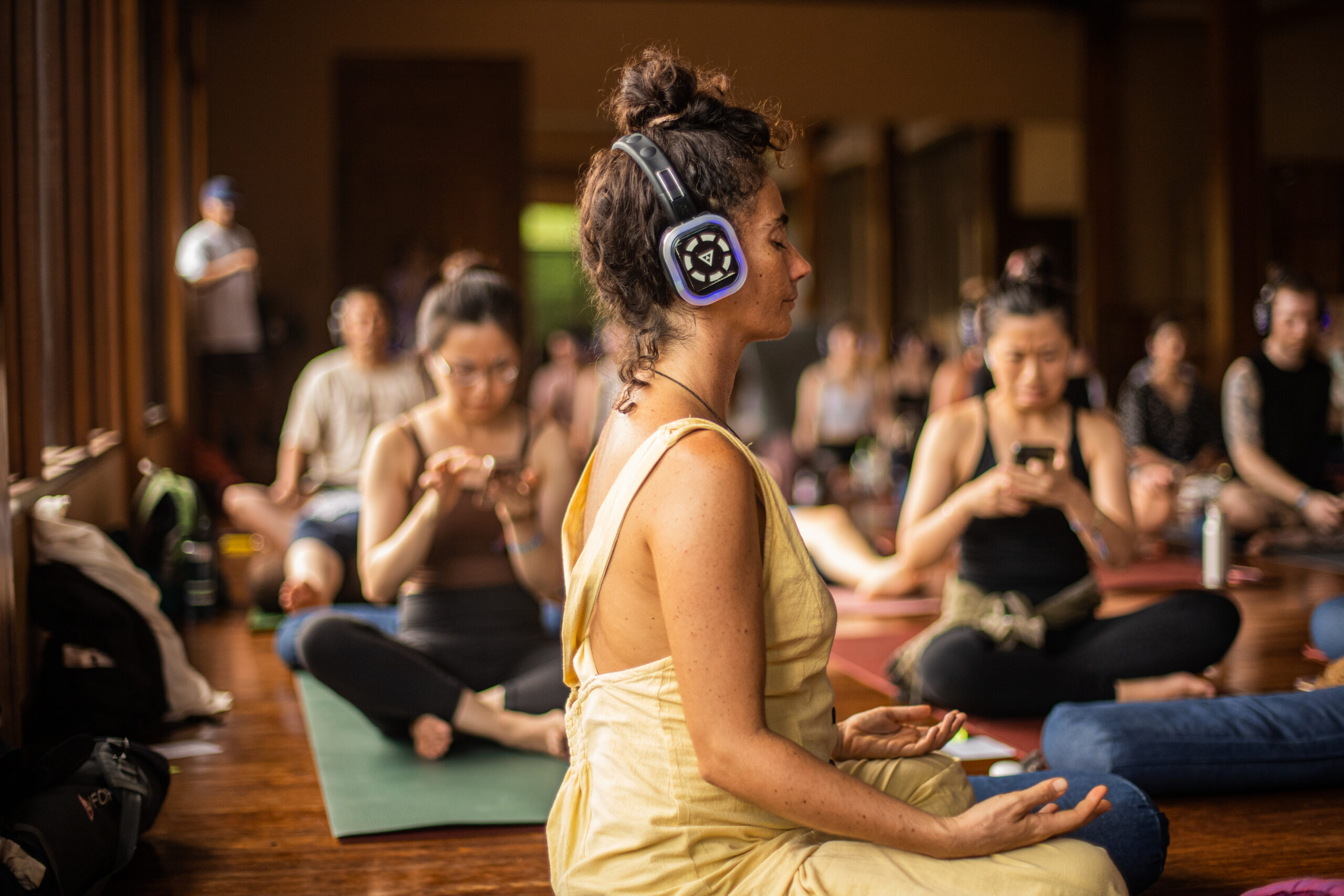
Focus is not a personality trait—it’s a state your nervous system can enter on demand. In this article, you’ll learn how dynamic Kriya-inspired breathing can sharpen attention, heighten executive control, and elevate output in less than 10 minutes. We’ll translate cutting-edge neuroscience into practice, unpack how Kapalabhati and breath retention tune catecholamines and brain rhythms, and show how The Pantheon Method—an immersive, 50-minute breathwork and meditation experience rooted in ancient yogic purification—builds a sustainable, high-performance focus habit. If you’re searching for breathwork for focus that is activating, not sedating, this guide is your blueprint.
Why attention is a physiological state you can train
Arousal and the prefrontal cortex
High-quality focus emerges when the prefrontal cortex (PFC) rides the “Goldilocks zone” of arousal. The Yerkes–Dodson law (1908) captures this curve: too little arousal and you’re sluggish; too much and control fragments. Adaptive gain theory (Aston-Jones & Cohen, 2005) explains how locus coeruleus norepinephrine dynamically tunes PFC signal-to-noise. Active, rhythmic breathing can nudge these levers quickly, giving you a non-pharmacologic way to set brain state for deep work.
Breathing, CO2, and attentional stability
Chemoreceptors in the brainstem track CO2 and pH, steering respiratory drive and autonomic tone. Strategic exhale-focused techniques transiently shift CO2 and heart rate variability (HRV) via respiratory sinus arrhythmia, altering attentional stability through vagal and sympathetic pathways (Porges, 2007). Rather than “relaxing,” the right cadence creates engaged calm—high intent, low noise—ideal for breathwork for focus.
Why dynamic beats gentle for workday performance
Slow, down-regulating breath has value for recovery. But for cognitive output, dynamic Kriya-style patterns (e.g., Kapalabhati) provide an arousal lift and heightened interoceptive clarity without sedation. The Pantheon Method leverages this precise state shift—energizing yet controlled—so you can sit down and execute.
The science behind Kriya dynamics: heat, rhythm, and retention
Kapalabhati: rapid exhale, sharp focus
Kapalabhati employs rapid, forceful nasal exhales to generate internal heat and rhythmic sympathetic activation. Nasal airflow stimulates trigeminal afferents and olfactory pathways linked to cortical oscillations, with evidence that nasal respiration entrains limbic–prefrontal rhythms relevant to attention. High-frequency yogic breathing has been shown to acutely sharpen selective attention and visual scanning (Telles et al., 2011).
Kumbhaka: deliberate retention as a control knob
Breath retention (Kumbhaka) elevates CO2, engages baroreflex mechanisms, and trains CO2 tolerance—key for keeping composure under cognitive load. Interoceptive training improves top-down regulation of salience and executive networks (Garfinkel et al., 2014). In practice, brief, strategically timed retentions lock in the arousal set by Kapalabhati and stabilize attentional resources.
Energy centers and binaural soundscapes
Sequential attention on energy centers (chakras)—from pelvic floor to crown—serves as structured interoceptive anchors over autonomic hubs (e.g., pelvic, celiac, cardiac plexuses). Layered binaural soundscapes can modulate cortical rhythms: gamma-frequency binaural beats have been linked to enhanced attentional control (Reedijk et al., 2013). The Pantheon Method integrates these elements with modern neuroscience to amplify state precision.
A 10-minute primer: The Pantheon Method protocol for peak focus
Setup and safety
Practice seated, spine tall, through the nose. This is an activating protocol—avoid if you are pregnant, have uncontrolled blood pressure, serious cardiac or neurological conditions, or a history of fainting. Always practice stationary. For the full 50-minute experience and coaching, explore The Pantheon Method.
Three-step micro-session before deep work
Use this precise, science-backed sequence of breathwork for focus 5–15 minutes before a cognitively demanding block:
- Prime with Kapalabhati (2–3 rounds). 40–80 sharp nasal exhales at ~1–2 Hz; passive inhales. Rest 30–45 seconds between rounds. Expect heat and heightened alertness.
- Retention ladder (Kumbhaka). After the final exhale, inhale to ~80% and hold 10–20 seconds; then exhale and hold empty 10–20 seconds. Repeat 2–3 cycles. Keep shoulders relaxed; focus on the solar plexus.
- Sequential focus scan (energy centers, 90 seconds). Place attention up the midline—pelvic floor, lower abdomen, solar plexus, heart, throat, brow, crown—spending one breath per center, then repeat. Maintain steady, alert breathing.
Optional: light gamma or beta binaural beats at low volume to enhance task-set formation.
When to deploy and how to stack
Use this micro-practice pre-deep work, pre-presentation, or during a midday lull. Stack with bright light or a short walk. Many professionals pair it with neuroplasticity principles (intense focus followed by deliberate rest) to consolidate learning.
What the evidence says about cognition and output
Acute gains in attention and speed
Studies on high-frequency yogic breathing report improvements in sustained attention and visual scanning tasks immediately post-practice (Telles et al., 2011; Kuppusamy et al., 2020). Reaction times can shorten, and commission errors drop—markers of better executive gating. These are the effects knowledge workers crave when they search for breathwork for focus.
Training the attentional networks
Short courses of breath-centric training improve executive function and conflict monitoring (Tang et al., 2007, 2010). While many trials use slower protocols, dynamic Kriya elements likely augment catecholamine tone and oscillatory coherence critical for task engagement. The Pantheon Method’s blend of rhythmic breathing, retention, and guided attention targets these mechanisms deliberately.
From lab to work: measurable productivity
Mindfulness training has improved working memory and reading comprehension in high performers (Mrazek et al., 2013). Add the performance arousal of Kapalabhati and Kumbhaka and you can expect less task-switching friction and more throughput. Trackable metrics include keystrokes per focused hour, error rates, and HRV rebound post-task—see our primer on the Effect of Breathwork on Brain Function and Health.
Biochemistry of sharp attention: catecholamines, heat, and CO2
Dopamine and norepinephrine set the gain
Optimal focus sits at an inverted-U for dopamine and norepinephrine in PFC (Arnsten, 2009). Rhythmic, active breathing elevates arousal without overshooting. Voluntary sympathetic activation via breathwork can increase circulating epinephrine (Kox et al., 2014), aligning with the alert, ready state you want for deep work.
Internal heat and metabolic readiness
Dynamic yogic breathing generates heat—a modern correlate to yogic tapas. Tummo research shows practitioners can raise peripheral temperature (Benson et al., 1982). While Kapalabhati is distinct, the shared principle—metabolic activation through controlled breathing and attention—prepares the system for cognitive load.
CO2 tolerance and composure under pressure
Short, deliberate retentions build comfort with elevated CO2, reducing panic signals from chemoreceptors and stabilizing attention during complexity. CO2-tolerance training maps to resilient performance: fewer impulsive overrides, steadier working memory, and a more precise sense of interoceptive cues.
Integrating into your day and tech stack
Soundscapes and attention entrainment
Pair your session with curated binaural soundscapes. Gamma-band binaural beats have been associated with improved attentional control (Reedijk et al., 2013), while mid-beta can support sustained vigilance. The Pantheon Method layers bespoke sound design under guided attention to tighten the spotlight of awareness.
What to track: HRV, errors, and time-on-task
Before/after markers make progress tangible: HRV rebound within 10–20 minutes post-work, decreased error rates, longer uninterrupted focus blocks, and improved subjective “clarity” scores. For a systematic approach, see How to Incorporate Breathwork Into Your Daily Life.
Build the habit, not just the hack
Consistency compounds. Anchor a 5–10 minute breathwork for focus session to your first deep-work block daily; add a second micro-dose before presentations. Combine with sleep, light, and movement basics outlined in Lifestyle Habits for Mental Wellbeing to raise the ceiling on cognition.
Key Takeaways
- Focus is a trainable physiological state governed by arousal and neuromodulators; dynamic breath shapes that state in minutes.
- Kapalabhati and Kumbhaka create an energizing, precise arousal lift, improving selective attention and executive control.
- Sequential energy-center focus and binaural soundscapes anchor interoception and may enhance oscillatory coherence.
- Evidence points to acute gains in attention and reaction time and longer-term benefits in self-regulation with consistent practice.
- Track HRV rebound, error rates, and time-on-task to quantify the impact; stack with light, movement, and sleep.
- The Pantheon Method delivers a 50-minute, immersive protocol that combines ancient yogic purification with modern neuroscience for reliable cognitive performance.
If you’re ready to replace scattered effort with precise, repeatable deep work, experience The Pantheon Method. Our 50-minute, Kriya-rooted breathwork and meditation sessions leverage sharp rhythmic breathing, strategic retention, energy center focus, and binaural soundscapes to generate the heat, clarity, and drive that high performers need. Explore the approach and book a session at thepantheonmethod.com, and deepen your understanding with Effect of Breathwork on Brain Function and Health and 3 Ways to Change Your Brain. Use breathwork for focus to set your brain for peak productivity—on purpose, every day.