We are living through an epidemic of exhaustion that sleep cannot fix.
In the modern world, we have been conditioned to view ourselves as biological machines. When we experience anxiety, we assume it is a glitch in our brain chemistry. When we feel chronic pain, we assume it is a mechanical failure of the body. We treat our minds like hard drives that need defragmenting and our bodies like engines that need fuel.
Yet, despite endless wellness optimization, biohacking, and productivity tools, millions of people walk through life feeling a profound, heavy disconnection. We are overstimulated, yet undernourished. We are hyper-connected, yet deeply isolated from our own internal silence.
Thousands of years before modern neuroscience mapped the vagus nerve or trauma specialists understood somatic memory, ancient yogic wisdom provided a flawless map of the human system. They understood that human beings are not monolithic. We are multidimensional.
This map is known as the Five Koshas.
The koshas meaning translates roughly to “sheaths” or “layers.” According to yoga philosophy, human consciousness is structured like the concentric layers of a lotus flower. To experience true emotional healing, nervous system regulation, and lasting peace, we cannot simply treat the outermost layer. We must understand how our trauma, stress, and vitality move through all five dimensions of our being.
This is not mystical dogma. This is the ancient science of human consciousness translated for the modern nervous system.
The Multidimensional Self: Exploring the Five Koshas
If you want to understand why traditional therapy sometimes plateaus, or why intense physical exercise doesn’t always cure mental burnout, you must look at the koshas. Healing must occur on the layer where the trauma is stored.
1. Annamaya Kosha (The Physical Body)
The outermost layer of our existence is the Annamaya Kosha, the physical body. Translated directly as the “food body,” this is the dense matter of our bones, tissues, muscles, and organs.
In modern society, our relationship with the Annamaya Kosha is largely aesthetic or functional. We punish it in the gym, we restrict its calories, or we numb it with comfort. But from the perspective of yoga and consciousness, the physical body is a living archive.
When you experience an emotional shock, a prolonged period of stress, or a boundary violation, and you do not have the psychological safety to process it, that energy does not disappear. It descends into the physical tissue. Trauma stored in the body is not a metaphor; it is a physiological reality. It manifests as the chronic tension in your trapezius muscles, the unexplained digestive inflammation, the locked hips, and the collapsed posture of a heart trying to protect itself.
Somatic memory dictates that the body keeps the score. You cannot simply “think positive” to release a muscle that has been braced in fear for a decade.
Healing the Physical Layer:
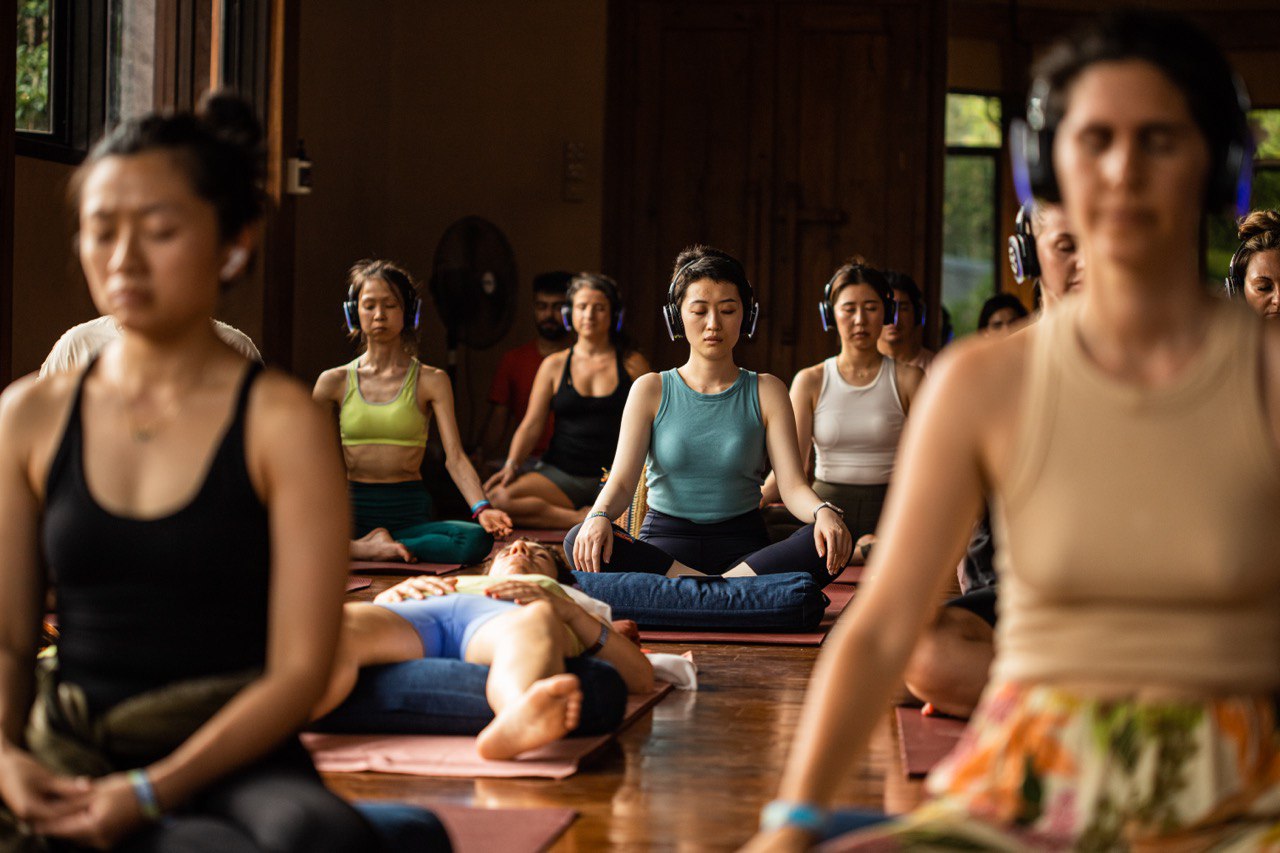
To purify the Annamaya Kosha, we must shift from punishing the body to inhabiting it. Conscious movement, yoga asana, deep tissue release, and somatic experiencing are essential. When you stretch a tight muscle while maintaining deep, conscious presence, you are not just increasing flexibility—you are metabolizing trapped emotional history.
2. Pranamaya Kosha (The Energetic Body)
Just beneath the physical structure lies the Pranamaya Kosha, the energy body. This layer is constructed of prana—the vital life force energy that animates all living things.
If the physical body is the hardware of a computer, the energetic body is the electrical current powering it. And the remote control for this electrical current is the breath.
Your breathing patterns are a flawless mirror of your internal state. When you are scrolling through stressful news or dealing with an overwhelming inbox, your breathing naturally becomes shallow, rapid, and confined to the upper chest. This sends an immediate signal to the brain that you are under threat, locking your biology into a sympathetic (fight-or-flight) state.
When the energy body is dysregulated, we experience chronic fatigue, energetic stagnation, and a sense of being “wired but tired.”
Healing the Energetic Layer:
This is where pranayama benefits become undeniable. Pranayama (breath control) is the ancient technology of nervous system regulation. Practices like Ujjayi (ocean breath) stimulate the vagus nerve, instantly lowering the heart rate. Nadi Shodhana (alternate nostril breathing) synchronizes the left and right hemispheres of the brain. Kapalabhati (breath of fire) clears out stagnant, depressive energy.
Breathwork benefits are profound because they bypass the analytical mind. You do not need to understand your anxiety to breathe your way out of it. By changing the rhythm of the breath, you forcefully shift the nervous system from chaos into coherence.
3. Manomaya Kosha (The Mental and Emotional Body)
Deeper still is the Manomaya Kosha, the mental and emotional sheath. This is the layer of sensory processing, memory, logic, and emotional reaction.
Never in human history has the Manomaya Kosha been under such relentless assault. We live in an attention economy designed to hijack our dopamine receptors. We consume thousands of images, opinions, and tragedies every single day. This creates a massive accumulation of mental density—a constant, exhausting internal monologue that we cannot seem to turn off.
When the Manomaya Kosha is congested, we suffer from intrusive thoughts, chronic anxiety, and emotional volatility. We lose the ability to see the world as it actually is, instead viewing everything through the distorted lens of past traumas and future anxieties. We become entirely reactive.
Healing the Mental Layer:
You cannot quiet the mind by arguing with it. To purify this layer, we must practice mindfulness practices and sensory withdrawal (Pratyahara). Meditation for anxiety works by training the mind to focus on a single point.
Mantra meditation is particularly effective here. By repeating a specific sound or phrase, we give the frantic mind an anchor. This repetition harnesses neuroplasticity, rewiring the brain’s default mode network to default to stillness rather than panic. Over time, the mental chatter thins out, creating a profound sense of internal spaciousness and mental clarity.
4. Vijnanamaya Kosha (The Intuitive Wisdom Body)
Beneath the chaotic noise of the thinking mind lies a layer of profound stillness: the Vijnanamaya Kosha, or the wisdom body.
The mental body (Manomaya) thinks, doubts, analyzes, and fears. The wisdom body (Vijnanamaya) simply knows. This is the realm of intuition, higher intelligence, and the witnessing consciousness.
Have you ever had a sudden flash of absolute clarity about a decision, a knowing that required no logical calculation? That is the Vijnanamaya Kosha. It is the part of you that remains untouched by the drama of your daily life. It is the silent observer watching your thoughts pass like clouds across a sky.
In modern life, we are taught to worship logic and ignore intuition. As a result, we feel disconnected from our purpose. We crowdsource our life decisions, asking the internet what we should do, because we have lost contact with our own inner compass.
Healing the Wisdom Layer:
The language of the Vijnanamaya Kosha is silence. To access this layer, we must cultivate periods of absolute quiet. As we regulate the breath and calm the mental chatter, the wisdom body naturally reveals itself. We stop acting out of compulsion and begin acting out of deep, aligned intelligence.
5. Anandamaya Kosha (The Bliss Body)
At the very core of your existence lies the Anandamaya Kosha—the bliss body.
It is crucial to understand that in ancient yoga wisdom, “bliss” does not mean a temporary high. It is not the dopamine hit of a new purchase or the excitement of a vacation. Ananda is a profound, unshakeable state of peace, wholeness, and unconditional love.
This layer is the closest to your true nature (the Atman). In the Anandamaya Kosha, there is no trauma. There is no fear. There is no separation between you and the rest of the universe.
You have likely touched this layer spontaneously. Perhaps while standing before a massive ocean, or in the moments just before falling asleep, or during a deep state of meditation. For a fraction of a second, the ego dissolves, the mind stops, and you experience the absolute perfection of simply existing.
Accessing the Bliss Layer:
You cannot “do” anything to build the bliss body. It is already there. Spiritual awakening is not about acquiring a new state of mind; it is about removing the blockages in the outer four koshas so that the light of the Anandamaya Kosha can shine through.
The Mechanics of Emotional Trapping
Understanding the five koshas completely changes how we approach emotional healing.
Emotions are simply energy in motion. When an emotion arises (in the Manomaya Kosha) and is fully felt, it passes through the system like a wave. But when an emotion is suppressed, judged, or feared, it gets trapped.
An unexpressed emotion in the mental body begins to alter the breath (Pranamaya Kosha). The breath becomes shallow and restricted. Over time, this restricted energy solidifies into physical tension and illness in the body (Annamaya Kosha).
This is the downward cascade of trauma.
To heal, we must reverse the flow. We cannot just talk about our trauma; we must move it. We use yoga and somatic movement to break up the physical density. We use breathwork to flush the nervous system and restore energetic flow. We use meditation to witness the mind without judgment. As we clear the outer layers, the trapped emotions are finally metabolized and released.
Modern Life is a War on the Koshas
When you look at modern society through the framework of the Koshas, our collective burnout makes perfect sense. Our environment is perfectly engineered to dysregulate every single layer of our being:
- Physical (Annamaya): We sit indoors, bathed in artificial light, staring at screens, compressing our spines, and eating highly processed foods.
- Energetic (Pranamaya): We live in chronic, low-grade stress, breathing shallowly, entirely disconnected from the natural rhythms of nature.
- Mental (Manomaya): We consume a toxic diet of hyper-stimulating digital content, destroying our attention spans and drowning our minds in noise.
- Wisdom (Vijnanamaya): We outsource our critical thinking to algorithms, losing trust in our own internal authority.
- Bliss (Anandamaya): We are sold the lie that peace can be purchased, keeping us on an endless treadmill of consumption.
To practice holistic healing today is an act of rebellion. It requires a deliberate, conscious choice to step out of the noise and turn inward.
The Path of Subtraction
The most beautiful revelation of the Koshas is this: you do not need to be fixed, because you are not fundamentally broken.
The modern self-improvement industry tells you that you must add things to your life to be worthy—more habits, more knowledge, more optimizations. But the yoga philosophy of the Koshas teaches us that healing is a path of subtraction.
You do not need to build a new, better version of yourself. You simply need to unburden the self you already are.
As you use movement to release physical tension, as you use breath to regulate your nervous system, and as you use meditation to quiet your mind, you are simply peeling back the layers of accumulated density. You are removing the armor. You are clearing the noise.
And when the noise finally clears, you will find that the peace, the clarity, and the profound bliss you have been searching for out in the world has been waiting quietly at your core all along.